
 +86-0515-86223369
  0
0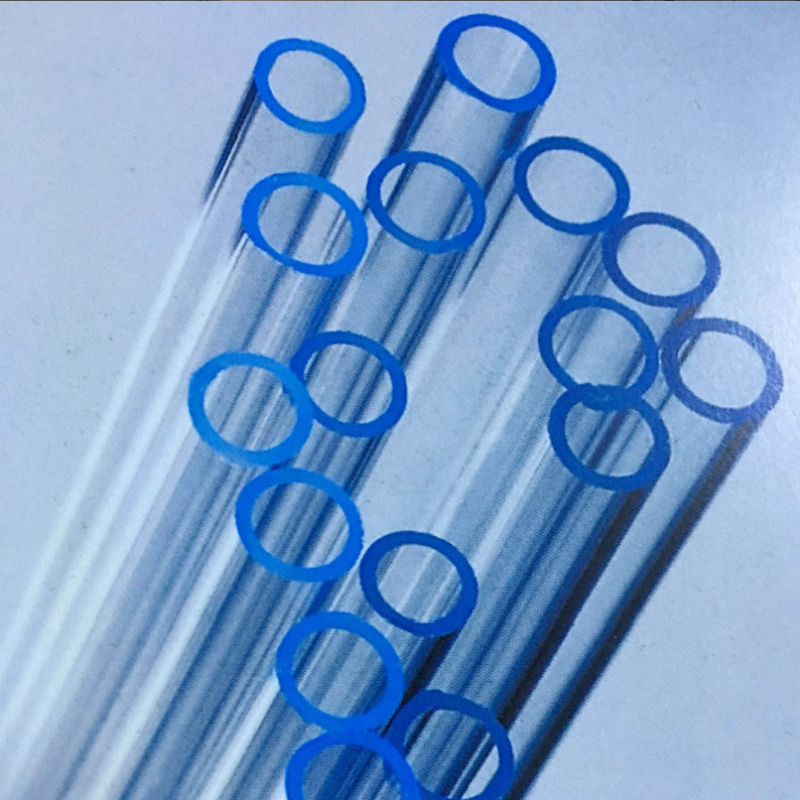

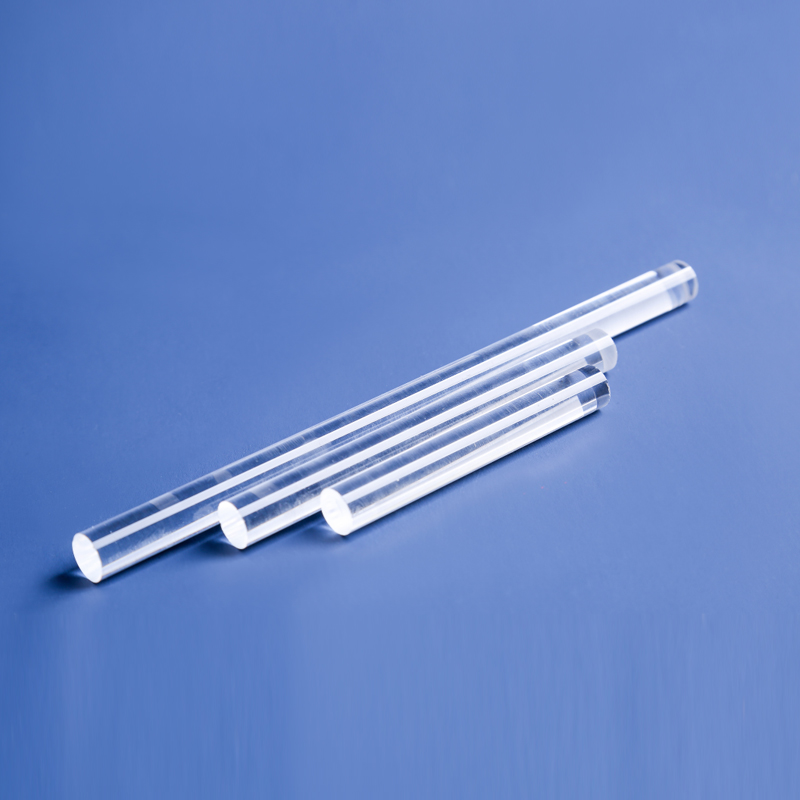
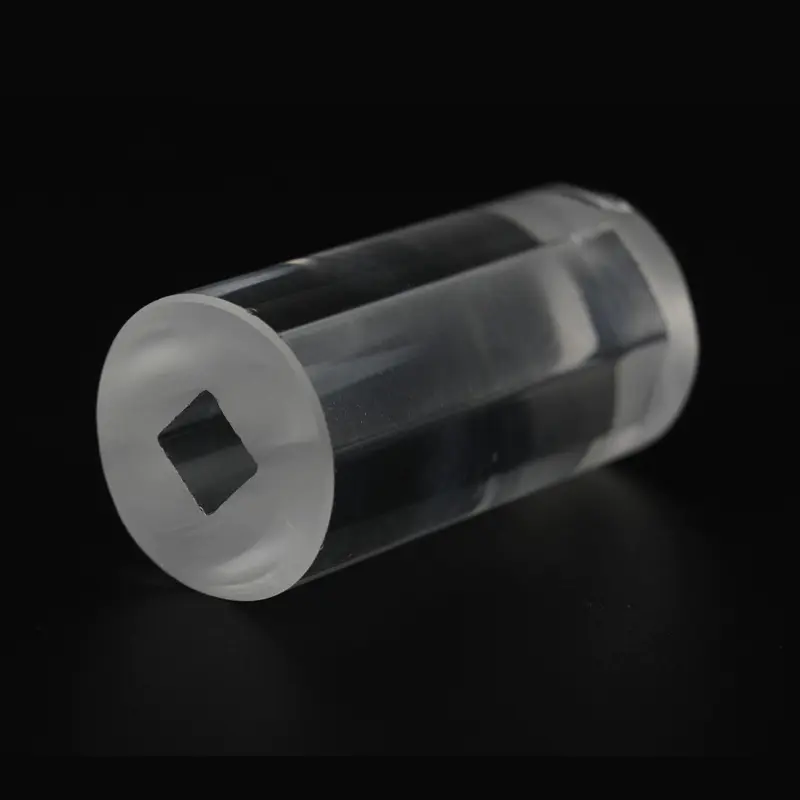
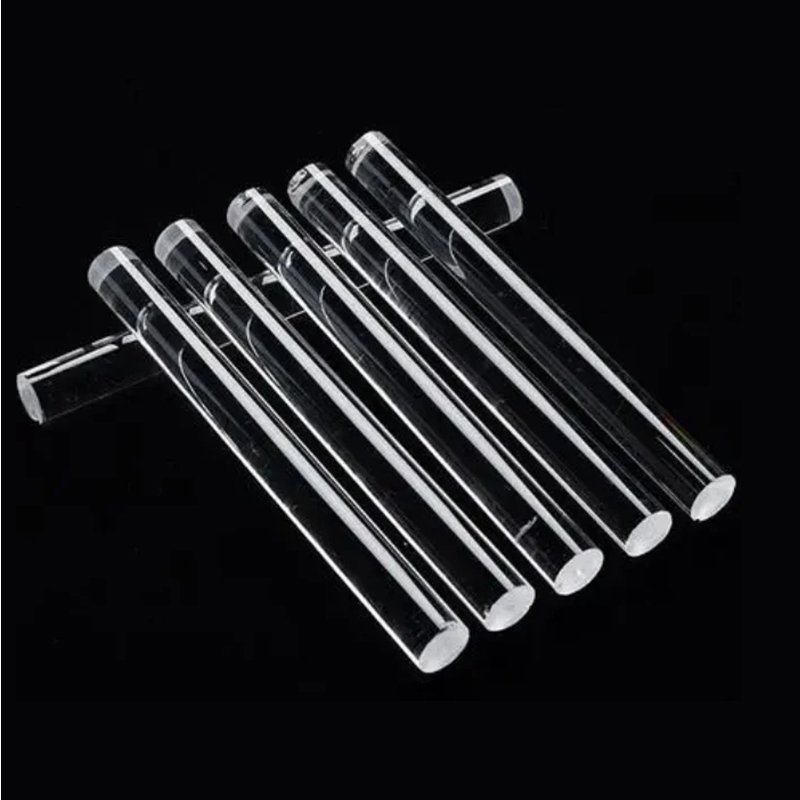
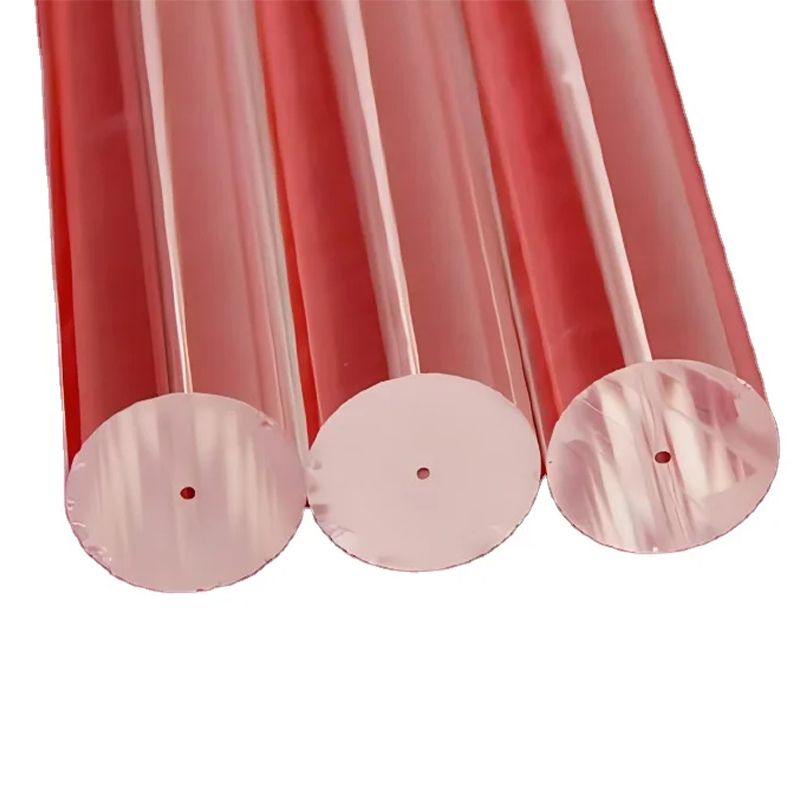
Jeśli potrzebujesz pomocy, skontaktuj się z nami
 Products & Solutions
 PRZED
PRZED

Dom / Aktualności / Wiadomości branżowe / Does Quartz Transmit UV Light? UV Transparency of Quartz Glass Explained
Does Quartz Transmit UV Light? UV Transparency of Quartz Glass Explained
Imagine you are specifying a UV disinfection chamber, a photochemistry reactor, or an optical cell for a spectrometer. One of the first material questions is whether quartz will actually let ultraviolet light through. The answer matters because ordinary glass, which is everywhere and cheap, stops most UV at the window. Fused quartz, in contrast, is one of the few transparent engineering materials that passes deep ultraviolet with very little loss. As a quartz glass manufacturer supplying semiconductor, photovoltaic, laboratory, and optical customers, we answer this question almost every week, so this article gives you the practical, specification-level answer.
Yes: quartz transmits UV light. Depending on the grade and the thickness, quartz glass passes roughly 85 to 92 percent of incident UV at 254 nm, and high-purity fused silica remains transmissive down to about 185 nm. The exact value depends on the material grade, impurity content, surface finish, and path length. In the sections below we explain why quartz behaves this way, how the different quartz grades compare, how quartz performs against borosilicate and soda-lime glass, and how to select the right UV-transmitting quartz for your own application.
Key point: Quartz transmits UV light in all three UV bands, and the grade and thickness you choose determine exactly how much of that UV reaches your process.
Does Quartz Transmit UV Light? The Direct Answer
The short answer is yes, and the useful engineering answer is also yes, with a grade note attached. Quartz glass is transparent across the full ultraviolet range used in industry: UVA from 315 to 400 nm, UVB from 280 to 315 nm, and UVC from 200 to 280 nm. A standard transparent quartz tube or plate transmits more than 85 percent of UVC radiation at 254 nm, which is why quartz is the specified envelope material for germicidal UV lamps, UV water purifiers, and UV reactors. Ordinary soda-lime glass, by comparison, absorbs UVC almost completely, and even borosilicate glass becomes opaque below roughly 300 nm.
When industry professionals talk about quartz that transmits UV light, they normally mean fused quartz or fused silica, not the crystalline quartz used for countertops. Fused quartz is made by melting natural quartz crystal or silica sand into an amorphous glass, while fused silica is usually made from synthetic precursors. Both forms share the same fundamental chemistry, pure silicon dioxide, with the differences in purity and manufacturing route showing up mainly in the deep-UV range.
| UV band | Wavelength range | Quartz glass behavior | Soda-lime glass behavior |
|---|---|---|---|
| UVA | 315-400 nm | Transmits about 90 percent across the band for standard quartz | Transmits partially above roughly 350 nm; absorbs most shorter UVA |
| UVB | 280-315 nm | Transmits roughly 85 to 90 percent | Blocks nearly all UVB |
| UVC | 200-280 nm | Transmits about 85 to 92 percent for UV-grade quartz | Blocks essentially all UVC |
| Deep UV / VUV | 100-200 nm | UV-grade synthetic fused silica transmits down to about 185 nm at 10 mm thickness | Opaque |
The numbers above assume a clean, polished surface and a typical wall thickness of 1 to 10 mm. Thicker sections absorb more, which is why a 50 mm quartz rod will show lower UV transmission than a 1 mm quartz window of the same grade. Surface finish also matters: a ground or frosted surface scatters a meaningful share of UV, while a polished surface keeps reflection losses close to the theoretical value of about 3.5 percent per surface.
Key takeaway: Quartz transmits UV light across UVA, UVB, and UVC, with the best grades transmitting down to roughly 185 nm; ordinary glass blocks almost all UVC and most UVB.
Why Quartz Transmits UV Light and Ordinary Glass Does Not
The physics behind UV transmission is actually the physics of absorption. Ultraviolet light is absorbed by a material when the photon energy matches an allowed electronic transition in the material. Pure fused quartz has a very wide band gap, approximately 8 to 9 electron volts. The most energetic UV photons used in practical systems, for example a 200 nm photon carries about 6.2 electron volts, do not have enough energy to excite an electron across that gap. As a result, there is no intrinsic absorption mechanism for UV light in pure silica, and the photons simply pass through.
Ordinary window glass is a different material chemically. Soda-lime glass contains sodium oxide, calcium oxide, and usually several hundred parts per million of iron. Iron, especially in its ferric form, is one of the strongest ultraviolet absorbers known; even a few parts per million make glass opaque to UVC. The modifier ions also break up the silica network and create non-bridging oxygen atoms, which introduce localized energy levels. Those levels give UV photons a pathway to be absorbed, so the glass blocks rather than transmits.
This is why purity is the central concept in UV-grade quartz. The quartz manufacturing process controls three things that determine UV transmission: the level of metal impurities, the concentration of hydroxyl groups, and the number of oxygen-deficiency defects. For deep-UV work below 220 nm, synthetic fused silica from high-purity precursors offers the cleanest network and the highest transmission. Flame-fused natural quartz, the source of most quartz tubes and plates on the market, has slightly lower deep-UV transmission because it retains trace elements from the natural crystal.
There is also a practical distinction between low-OH and high-OH fused silica that buyers of UV systems should understand. High-OH or wet fused silica, typical of JGS1, gives excellent deep-UV transmission and better resistance to UV-induced damage. Low-OH or dry fused silica, typical of JGS3, was developed for infrared optics and has reduced transmission below about 260 nm. For ultraviolet applications, high-OH grades are almost always the safer choice.
- Purified SiO2 network: no modifier ions to absorb ultraviolet energy.
- Wide band gap: UV photons lack the energy to trigger electronic absorption.
- Low metal impurities: no iron or transition-metal absorption bands.
- Controlled structure: minimal oxygen-deficiency centers that absorb near 248 nm and 215 nm.
Key takeaway: Quartz transmits UV light because pure silicon dioxide has a wide band gap and a network free of UV-absorbing impurities, while ordinary glass blocks UV because of network modifiers and trace metal contamination.
Quartz UV Transmittance by Grade: JGS1, JGS2, JGS3 and Fused Silica
Not all quartz transmits UV equally, and a large part of specifying a quartz component is choosing the right grade. The Chinese optical standard classification JGS1, JGS2, and JGS3 is widely used across the industry and maps closely to international fused silica types. The ordering principle is simple for the buyer: the lower the number, the better the deep-UV performance. JGS1, the synthetic far-UV grade, transmits down to about 185 nm; JGS2, made from natural quartz, covers the UV range above roughly 220 nm; and JGS3, a low-OH infrared grade, is not recommended for deep-UV service.
| Grade | Manufacturing basis | Practical UV range | Typical transmittance at 254 nm (10 mm) | Primary applications |
|---|---|---|---|---|
| JGS1 | Synthetic fused silica, high OH | 185-2500 nm | About 90 percent | Deep-UV optics, 193/248 nm semiconductor, UV spectroscopy |
| JGS2 | Flame-fused natural quartz | 220-2500 nm | About 86 percent | UV lamps, sleeves, windows, general UV optics |
| JGS3 | Low-OH fused silica | 260-3500 nm | About 80 percent | IR optics, thermal imaging, UV-IR broad-band systems |
| Standard transparent quartz tube | Electrically fused quartz | 240-2500 nm | About 82 percent | Lamp envelopes, heating tubes, industrial reactors |
Because JGS1 is the material of choice when a system has to work at 185 to 220 nm, it is also the grade we recommend for demanding UV applications such as ozone reactors, excimer laser optics, and VUV spectroscopy. The combination of broad transmission and low solarization makes it worth the higher price when deep-UV performance is on the line.
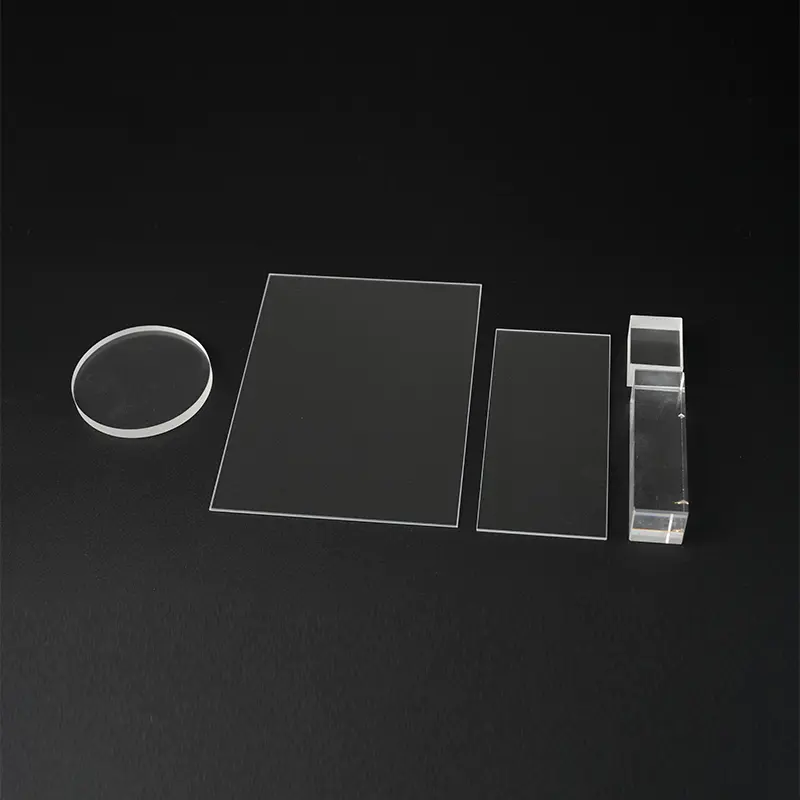
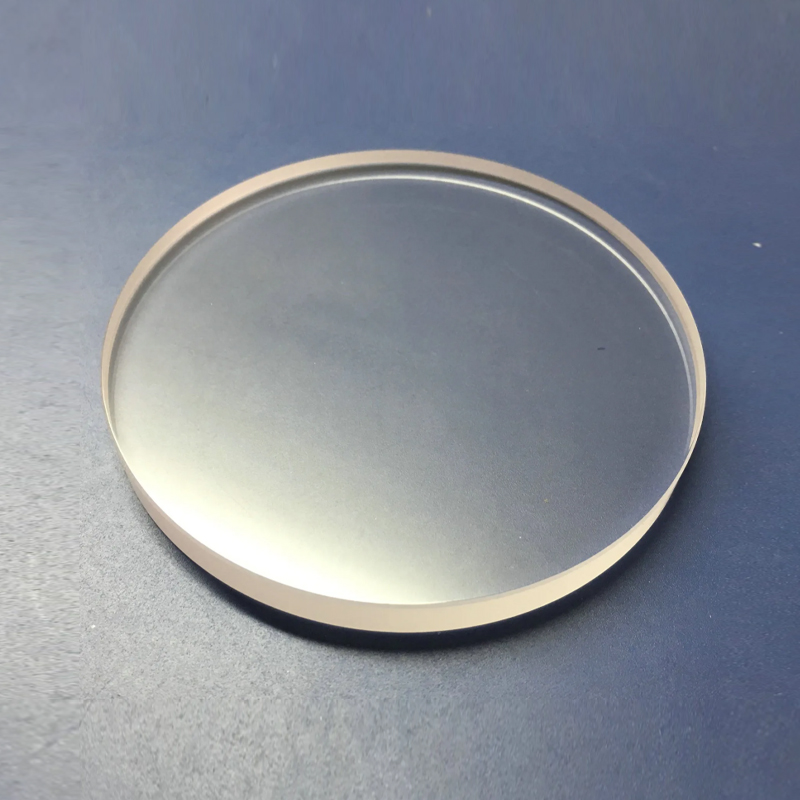
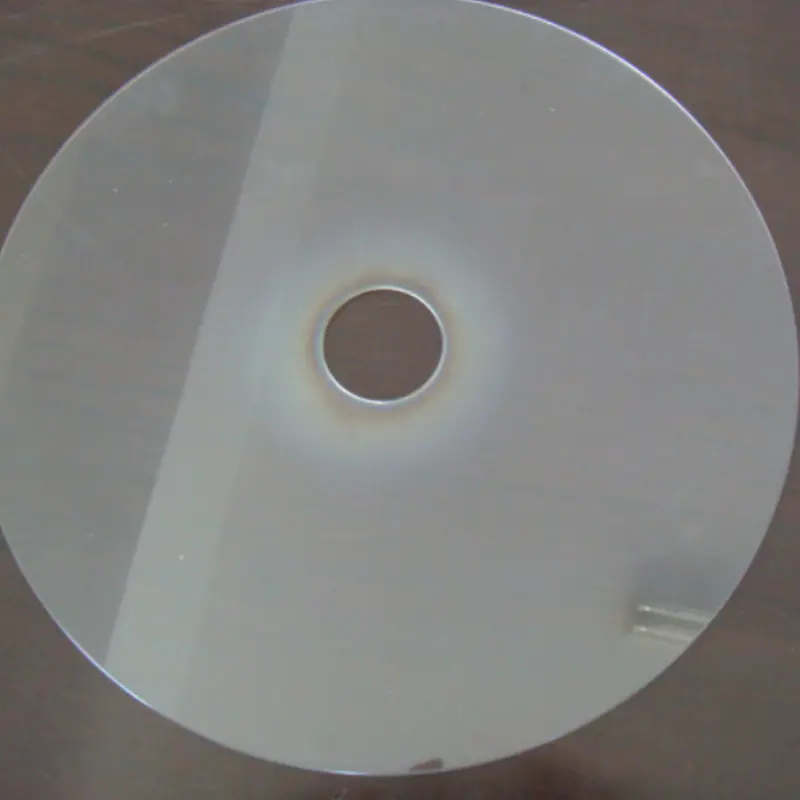
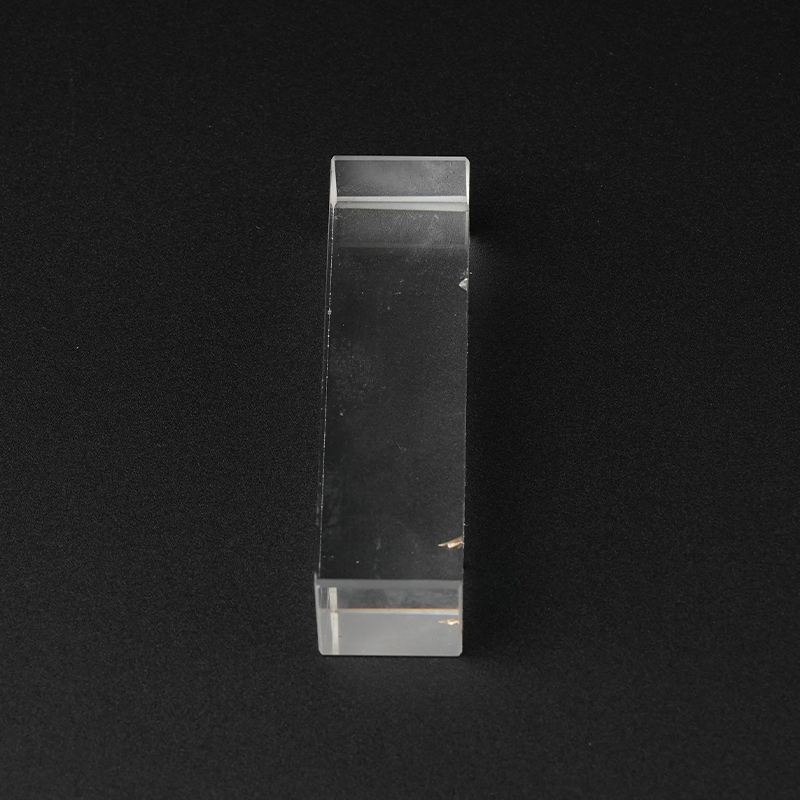 Far UV Optical Quartz Glass JGS1 for Deep Ultraviolet ApplicationsThis synthetic fused silica grade offers transmission in the 185–220 nm range with low solarization, making it suitable for demanding UV systems like excimer laser optics and VUV spectroscopy.View Product →
A transmission curve tells a clearer story than a single data point. The chart below plots internal transmittance as a function of wavelength for three common materials at a thickness of 10 mm. The three curves cover UV-grade fused silica, standard fused quartz, and borosilicate glass from 180 nm to 400 nm. You can see that the material choice becomes critical below 300 nm. In particular, the deep-UV region between 180 nm and 220 nm separates synthetic fused silica from every other glass family.
The first thing the reader should notice is how flat the UV-grade fused silica curve is: it stays above 90 percent from 200 nm all the way to 400 nm. Standard fused quartz follows a similar path at longer wavelengths, but its transmission starts to fall noticeably below 220 nm. At 200 nm, standard quartz transmits only about 70 percent in a 10 mm path, while UV-grade fused silica still transmits more than 90 percent. Borosilicate glass, shown in the light gray curve, is effectively opaque below 300 nm. Between 310 nm and 330 nm, borosilicate climbs rapidly from roughly 20 percent to over 60 percent, which matches its behavior as a UVA-transmitting material that blocks UVB and UVC. At the practical germicidal wavelength of 254 nm, UV-grade fused silica and standard quartz both transmit strongly, while borosilicate transmits essentially zero. This is exactly why quartz, not borosilicate, appears in the wall of every mercury and amalgam UV disinfection lamp. For applications that need wavelengths shorter than 200 nm, such as ozone generation at 185 nm, only high-purity synthetic fused silica provides a useful working transmittance. The curves also explain why switching from a fused silica window to a borosilicate window in a UV spectroscopy system completely changes the measurement. In short, the transmission spectrum answers both the scientific question and the purchasing question: quartz transmits UV light, and the grade you choose decides where the practical UV cut-off lies.
For production-scale purchasing, a manufacturer can provide measured transmission curves for each batch. UV-grade fused silica and standard quartz both transmit UV light, and the practical question is only where your working wavelength sits.
Key takeaway: Quartz UV transmittance is grade-dependent: JGS1 synthetic fused silica gives the deepest UV range down to 185 nm, JGS2 covers 220 nm and above, and JGS3 low-OH fused silica should be reserved for IR work.
Quartz vs Borosilicate vs Soda-Lime Glass: UV Transmission Compared
A direct comparison at fixed wavelengths is the fastest way to communicate why quartz is the default UV material. At 254 nm, the wavelength of germicidal lamps, quartz transmits more than 80 percent while borosilicate and soda-lime glass transmit essentially nothing. At 302 nm, in the UVB range, quartz still transmits around 90 percent, and borosilicate only begins to open up. At 365 nm, in the UVA range, quartz is still the leader but borosilicate becomes usable and soda-lime reaches about 50 percent. The conclusion is unambiguous: the shorter the wavelength, the more quartz pulls ahead.
| Material | UVC at 254 nm | UVB at 302 nm | UVA at 365 nm | Approximate UV cut-off |
|---|---|---|---|---|
| UV-grade fused silica (JGS1) | About 90 percent | About 92 percent | About 92 percent | About 185 nm |
| JGS2 quartz | About 87 percent | About 89 percent | About 90 percent | About 220 nm |
| Borosilicate glass | About 0 percent | About 15 percent | About 78 percent | About 300 nm |
| Soda-lime glass | About 0 percent | About 0 percent | About 50 percent | About 350 nm |
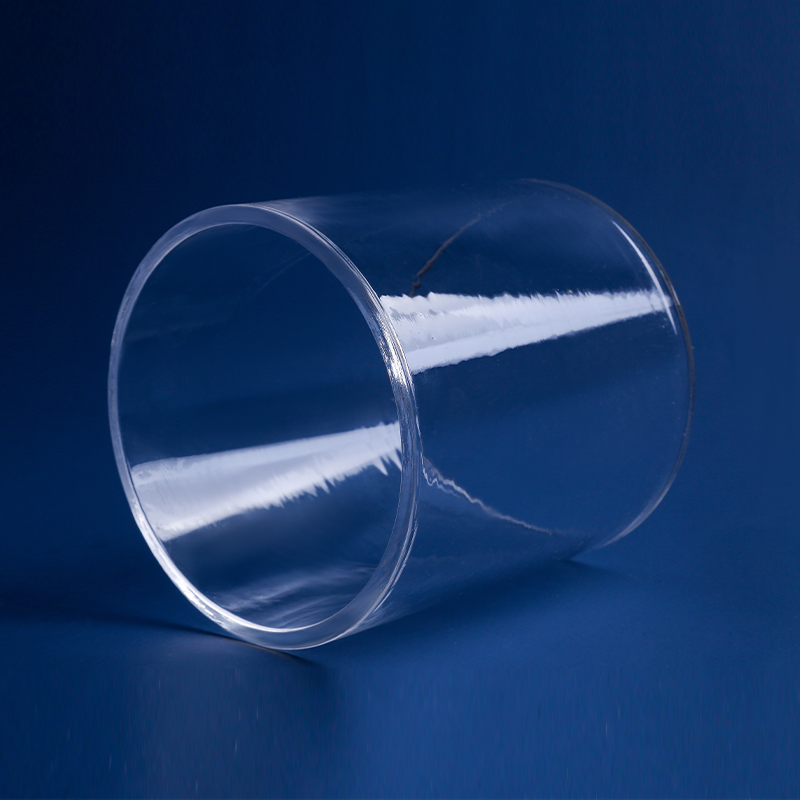
Several buyers ask us whether it is acceptable to use borosilicate sleeves in a UV-C system to reduce cost. The measured answer is no: at 254 nm the sleeve itself would absorb nearly all the UV-C, so the lamp would heat water or air without delivering a meaningful dose. The only materials that work for UVC in industrial practice are quartz, high-purity fused silica, and certain fluoropolymers such as PTFE and PFA, and fluoropolymers rarely have the structural or thermal properties of quartz. JGS2 plates provide the most cost-effective combination of UV transmission and thermal stability for industrial envelopes, viewports, and covers.
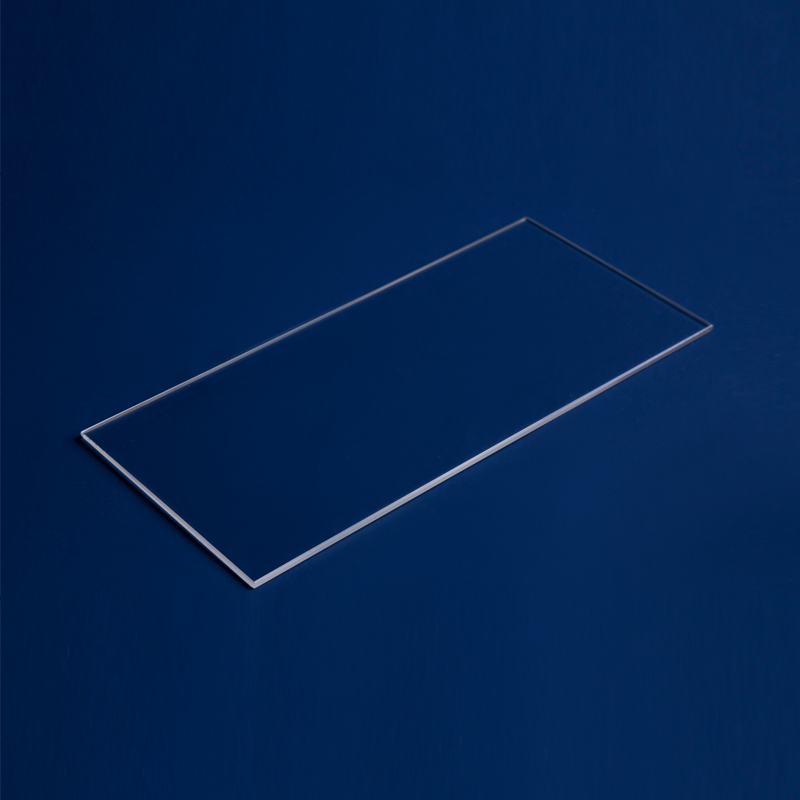
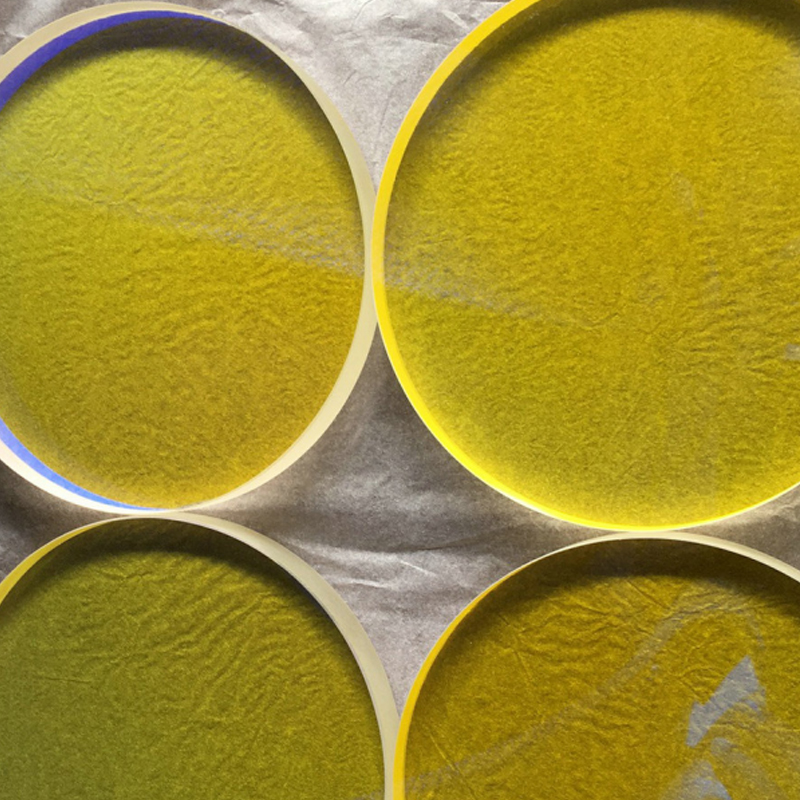
UV Optical Quartz Plate JGS2 for Industrial UV-C EnvelopesWith no absorption band from 200 to 250 nm, this quartz plate provides cost-effective UV transmission and thermal stability for lamp sleeves, viewports, and covers in ultraviolet-C systems.View Product →
A spectral curve is only part of the story; buyers also want a quick comparison at the exact wavelength their process uses. Ultraviolet-C light at 254 nm is the standard output of low-pressure mercury germicidal lamps, so this wavelength appears in thousands of product specifications. The chart below compares the measured transmission of six common material groups at 1 mm thickness. We intentionally used a thin, representative wall thickness because most UV lamp sleeves and optical windows are specified in the 1 mm to 3 mm range. The bars illustrate how wide the gap is between quartz products and conventional glass products at this critical wavelength.
UV-grade fused silica and low-OH fused silica sit at the top of the chart, both transmitting about 90 percent of incident UVC. JGS2 quartz trails slightly at roughly 86 percent, a difference that is rarely visible in everyday use but that can affect lamp efficiency over thousands of operating hours. Standard fused quartz tubes, which are the workhorse material for quartz sleeves and lamp envelopes, transmit about 82 percent at this thickness. Borosilicate and soda-lime glass, shown as negligible bars at the bottom, transmit essentially no UVC at 254 nm. The practical consequence is that a lamp designed with a borosilicate sleeve can never deliver its rated UVC dose, no matter how much power is applied. This is also why optical probes and UV sensors used at 254 nm always specify quartz windows instead of glass windows. Another useful observation is that the spread between the four quartz grades is only about eight percentage points, which means even the most economical quartz grade is still a genuine UV transmitter. When the application moves to shorter wavelengths, such as 222 nm krypton-chloride excimer lamps, the same ranking holds but the gap between JGS1 and standard quartz widens. At 185 nm, the difference would become even more dramatic, and only the synthetic fused silica grades would remain useful. From a sourcing standpoint, this chart is a good reminder to ask your supplier for the actual transmission curve of the grade they quote, because not all quartz is the same. A trustworthy manufacturer will provide measured data for every production batch.
For a manufacturer's perspective, the takeaway is straightforward: we supply all of these grades in tube, rod, and plate form, and wholesale orders can mix grades in one shipment. Because the optical differences are measurable, we always recommend quoting with a target wavelength.
Key takeaway: At UVC wavelengths, quartz is the only conventional glass material that transmits usable levels of UV light; borosilicate and soda-lime glass both block 254 nm radiation almost completely.
Industrial and Laboratory Applications That Rely on Quartz UV Transmission
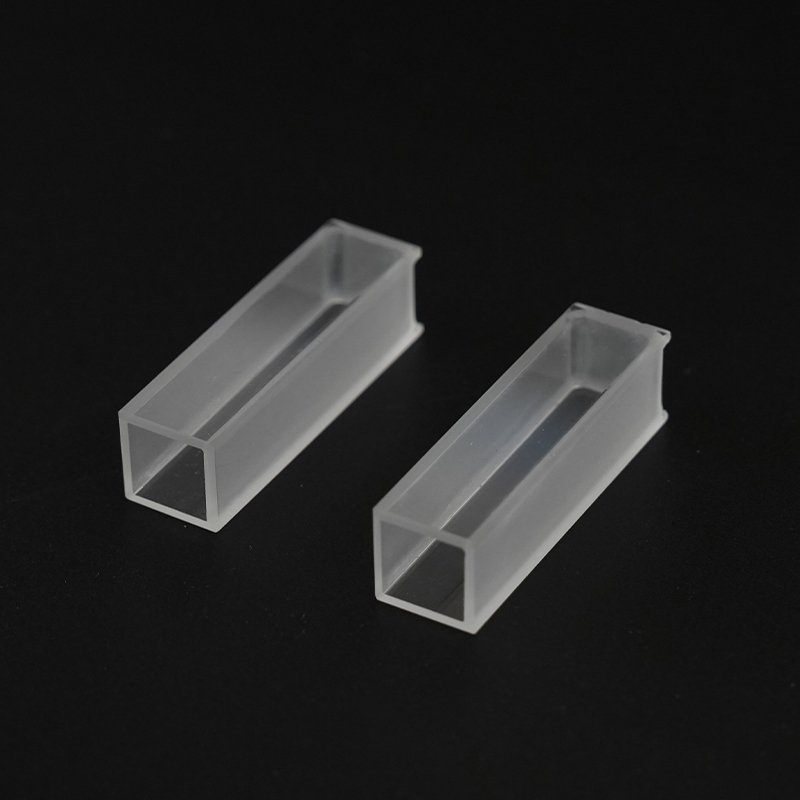
The UV transparency of quartz is not a laboratory curiosity; it is what makes several billion-dollar industries work. In UV disinfection, quartz sleeves and quartz lamp envelopes let a mercury lamp emit UVC into water, air, and surfaces. In semiconductor fabrication, quartz optics and quartz windows carry 193 nm and 248 nm laser light through steppers and inspection tools. In analytical chemistry, quartz cuvettes and quartz capillaries allow UV spectroscopy below 200 nm that glass cannot support. In UV curing, quartz rods and plates deliver UVA and UVB energy to adhesives, inks, and coatings without degrading under continuous exposure.
Each application places slightly different demands on the quartz. Disinfection systems need high UVC transmission in thin-walled tubes, plus thermal-shock resistance when the lamp is hot; semiconductor tools need premium synthetic fused silica with low bubble content and certified uniformity; UV curing lines need large quartz plates that can be handled, cleaned, and replaced quickly. A factory that produces quartz in all of these forms can supply any of them from the same production system.
UV Disinfection and Environmental
|
Semiconductor, Optical and Analytical
|
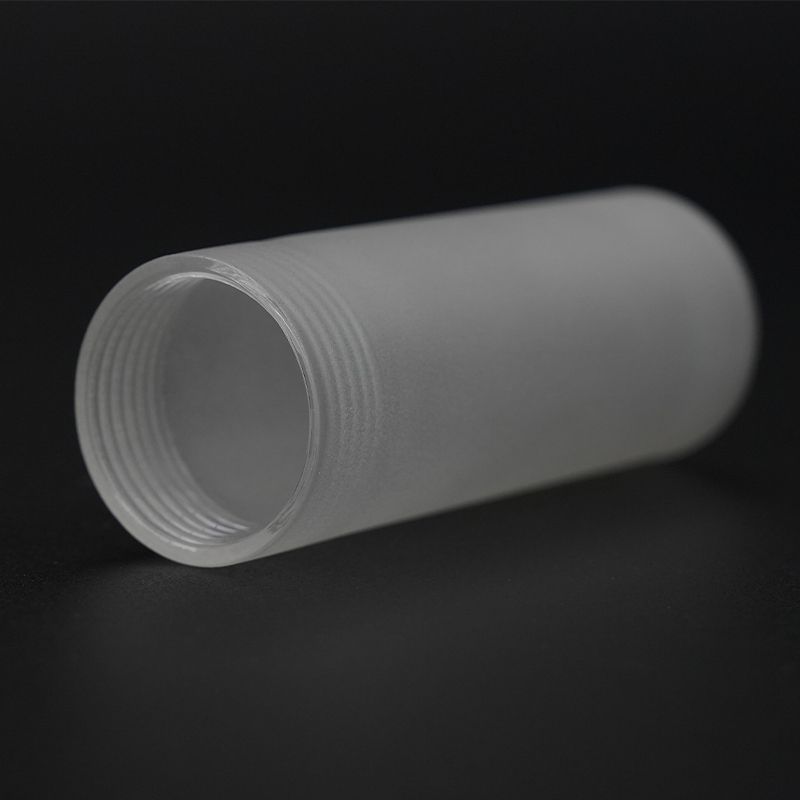
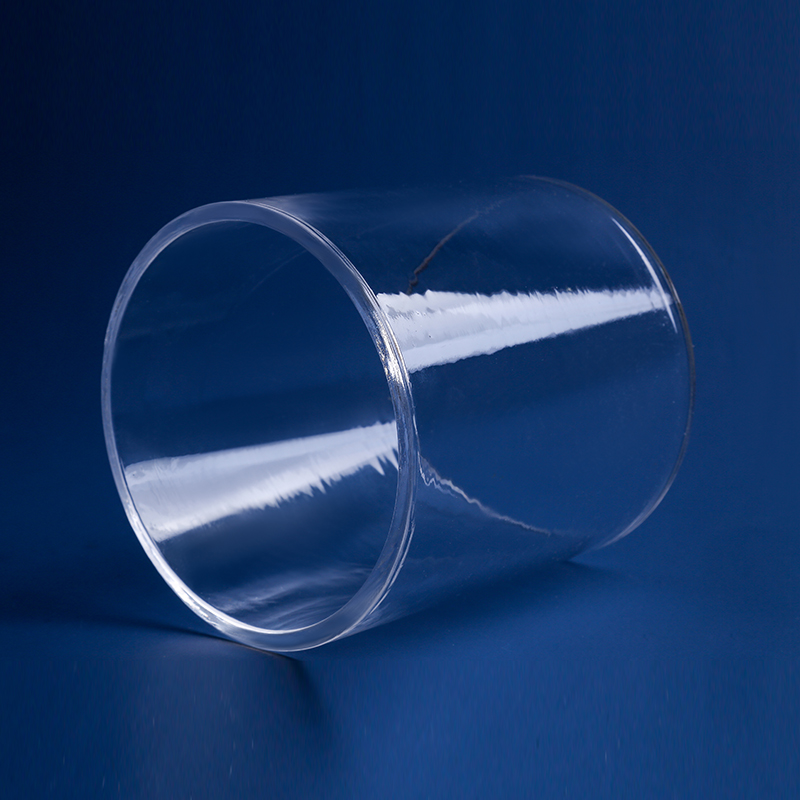
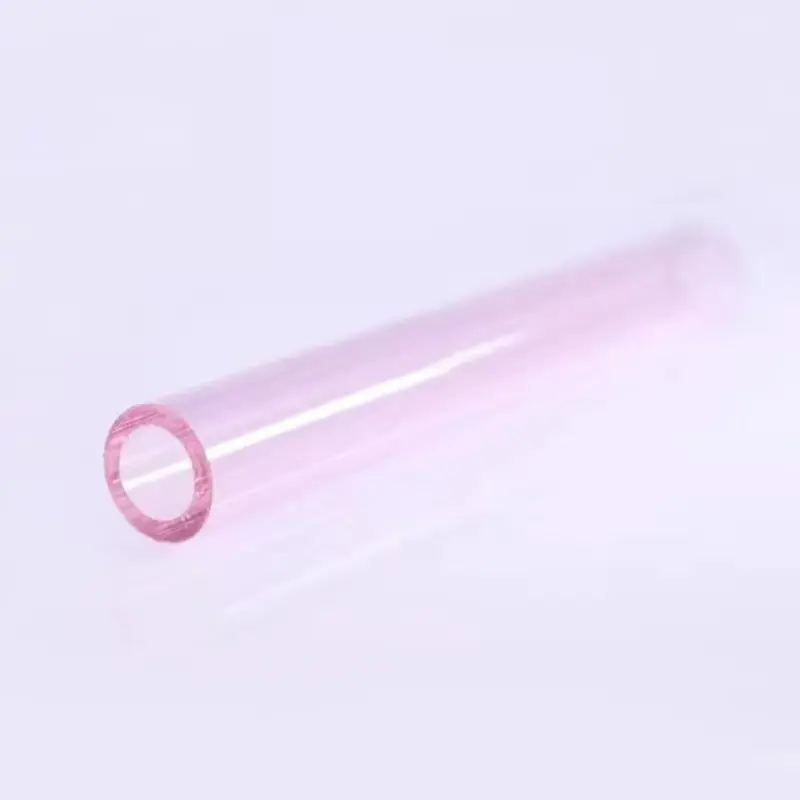
The product that combines both worlds for industrial buyers is the UV-resistant quartz tube. It is used both as a lamp envelope in high-output germicidal fixtures and as a protective cover in UV curing equipment, and it has to maintain stable transmission over thousands of hours. Doped versions add another layer of control: by chemically modifying the silica network, doping can shift or eliminate specific UV bands, which is useful when a lamp needs to pass certain wavelengths while suppressing others. For customers who need precision quartz windows and sight glasses for UV chambers, we offer polished windows in JGS1, JGS2, and standard quartz, with custom sizes and edge finishes. Our high-temperature and ultraviolet-resistant quartz glass tubes are manufactured for exactly this duty cycle, with controlled wall thickness and measured UVC transmission.
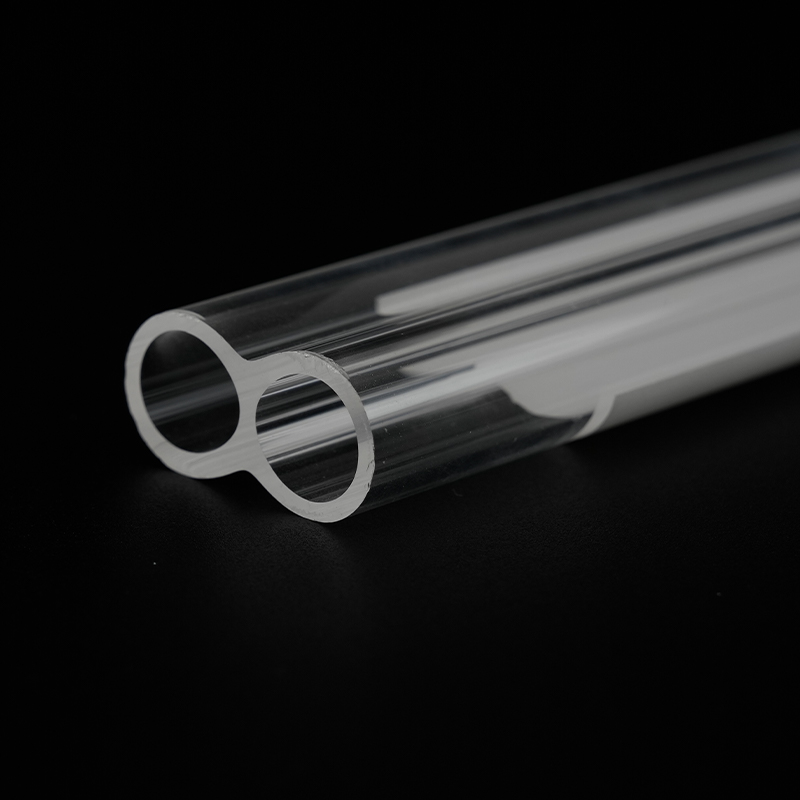 High-Temperature and Ultraviolet Resistant Quartz Glass TubesThese SiO₂ tubes exceed 93% transmittance from visible to near-infrared, with controlled wall thickness and measured UVC transmission, making them reliable envelopes for germicidal and curing lamps.View Product →
A final point on suitability: if your process uses UV light to cure, disinfect, analyze, or ablate, quartz is almost always the correct optical interface. The few cases where quartz is not recommended are processes that rely on wavelengths below about 180 nm, where even synthetic fused silica begins to lose transparency, and processes that need selective UV blocking, where doping or coating rather than plain quartz is the right tool.
Key takeaway: From germicidal lamps at 254 nm to lithography optics at 193 nm, quartz UV transmission is the enabling property behind disinfection, semiconductor manufacturing, UV spectroscopy, and UV curing.
How to Choose UV-Transmitting Quartz for Your Application
Choosing the right UV-transmitting quartz starts with one number: the shortest wavelength your process will use. That single number determines the grade, the material purity, and usually the price. The second question is the path length, because a 1 mm window and a 50 mm rod transmit very differently even in the same material. The third group of questions covers operating temperature, pressure, chemical exposure, and mechanical mounting, all of which influence the final component design.
As a useful rule of thumb: above 300 nm, most transparent quartz grades work; below 300 nm, specify a UV-grade material; below 220 nm, specify synthetic fused silica. If your supplier cannot tell you the practical cut-off of their quartz, treat that as a red flag.
Standard Clear Quartz
Best for 254-365 nm lamp
envelopes, sleeves,
and reactor tubes.
Economical, high
thermal-shock resistance,
roughly 82 to 86 percent
UVC transmission
at 1 to 2 mm wall.
JGS1 UV-Grade Fused Silica
Covers 185-2500 nm for
deep-UV optics and
semiconductor tools.
Highest purity, lowest
solarization, premium
price.
JGS2 UV-Grade Quartz
Covers 220-2500 nm.
Balanced choice for
UV windows, process
viewports, lamp sleeves
, and general optical work.
Low-OH Fused Silica
For IR or broad-band
UV-IR optics. Avoid below
260 nm; deep-UV
transmission is distinctly
lower than JGS1.
Beyond the grade, four specification details deserve attention. Wall thickness or window thickness changes both the mechanical strength and the transmission, so optimise the thinnest section that can withstand your process pressure. Surface quality matters: a fine-polished surface minimises scatter, while a ground surface can reduce effective UV delivery by 5 to 15 percent. Edge finishing and tolerances matter for sealing into metallic or ceramic housings. Finally, request actual transmission data at your working wavelength, not just a typical curve from a datasheet.
Because we manufacture rather than only resell quartz, we can supply UV-grade products with batch-specific test certificates, custom dimensions, and mixed loads for wholesale buyers. The same factory that makes JGS1 optical plates also produces large-diameter quartz tubes for UV reactors, so a single supplier can cover both optics and process hardware. If your application requires the opposite behavior, that is, blocking UV instead of transmitting it, doped quartz tubing for UV filtration is produced by our factory with controlled spectral performance.
Key takeaway: Define the shortest working wavelength first; then choose the grade, wall thickness, surface finish, and supplier that can deliver measured UV transmission at that wavelength.
Handling, Cleaning and Maintenance of UV-Grade Quartz
UV-grade quartz buys its transparency with purity, which means surface contamination shows up immediately in UV systems. A single fingerprint contains oils that absorb strongly in the ultraviolet, and a contaminated quartz window can measure 10 to 20 percent lower UVC transmission than a clean one. Absorption at the surface also heats the quartz locally, which can accelerate devitrification or cracking in high-power lamps. Keeping UV optical surfaces clean is therefore not cosmetic; it is a performance requirement.
- Handle quartz edges only, with clean nitrile or lint-free gloves.
- Clean with optical-grade ethanol or acetone and a lint-free wipe; rub gently and inspect for streaks.
- For heavy contamination, use a diluted hydrofluoric acid etch, followed by a deionized water rinse and drying, with proper safety controls.
- Avoid abrasive cleaners; scratches scatter UV light and reduce delivered dose.
- Inspect lamp sleeves and windows periodically with a UV radiometer; replace when transmission drops by more than 5 to 10 percent.
- Store spare quartz parts in protective sleeves in a clean, dry area.
Thermal handling deserves a separate note. Quartz glass has a low coefficient of expansion, roughly one-seventeenth that of soda-lime glass, so it resists thermal shock far better than ordinary glass. That does not mean it is indestructible: a cold quartz sleeve exposed to a hot lamp or a wet surface touching a hot tube can still crack. Heat new components gradually in the system, keep seals even, and avoid localized flame or hot-spot contact.
On the manufacturing side, we also carry out quality checks in the same spirit. Each UV-grade component is inspected for surface quality, measured for transmission at the customer's wavelength when required, and packed so that the optical surface arrives untouched. These steps may sound simple, but they are why a quartz product from a dedicated manufacturer performs differently from a generic piece of quartz glass.
Key takeaway: Clean surfaces and gentle thermal handling preserve quartz UV transmission: even a fingerprint can cut UVC output by 10 to 20 percent.
FAQ: Does Quartz Transmit UV Light?
Here are the questions that laboratory buyers, plant engineers, and procurement teams ask most often about quartz and ultraviolet light.
Q1. Does quartz transmit UV light or block it?Yes, quartz transmits UV light. Quartz glass passes ultraviolet across the UVA, UVB, and UVC ranges, and high-purity synthetic fused silica transmits down to about 185 nm. Ordinary glass does not: it blocks almost all UVC and most UVB. |
Q2. What is the UV transmittance of quartz at 254 nm?At a typical 1 to 2 mm wall thickness, UV-grade quartz transmits about 85 to 92 percent at 254 nm. JGS1 fused silica is near 90 percent, JGS2 around 86 to 88 percent, and standard transparent quartz tubes about 82 to 86 percent. Borosilicate and soda-lime glass transmit essentially zero at this wavelength. |
Q3. What is the difference between JGS1, JGS2, and JGS3 quartz?JGS1 is synthetic fused silica with the widest UV range, down to 185 nm. JGS2 is made from natural quartz and covers the range above about 220 nm, which is enough for most UV lamps and windows. JGS3 is a low-OH grade intended for infrared optics, and its UV performance below 260 nm is distinctly lower. |
Q4. Can quartz tubes be used for UVC germicidal lamps?Yes. Quartz tubes are the standard envelope and sleeve material for low-pressure and amalgam UVC lamps. They combine high transmission at 254 nm with the thermal-shock resistance needed when lamps operate at high surface temperatures. |
Q5. Does ordinary glass block UVC?Yes. Both soda-lime and borosilicate glass absorb UVC almost completely. That is why UV disinfection lamps, ozone lamps, and UV sensors must use quartz rather than glass envelopes and windows. |
Q6. Can I buy custom UV-grade quartz products wholesale?Yes. As a quartz glass manufacturer, we supply JGS1, JGS2, JGS3, and standard quartz in tube, rod, plate, window, and custom fabricated forms. Wholesale orders, OEM dimensions, and production quantities are all available, and every product can be shipped with measured UV transmission data. |
Key takeaway: Quartz is the only conventional glass material that transmits UV light from 185 nm to the visible range; when in doubt, specify the grade and verify the transmission at your operating wavelength.
Explore UV-Grade Quartz Products from Our Factory
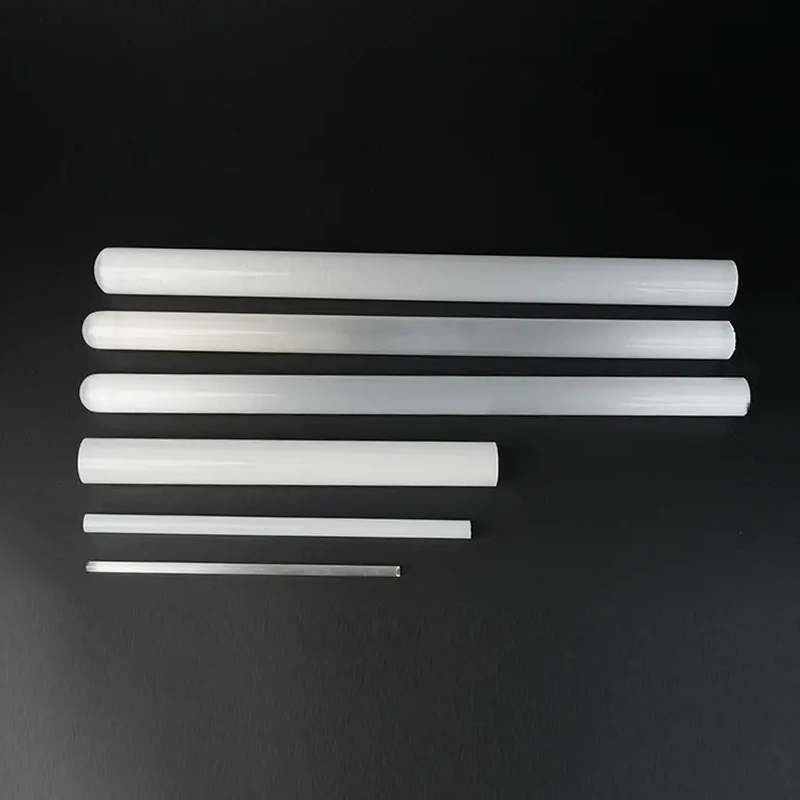
Our production program covers UV-transmitting quartz in every form a UV system needs: tubes for lamp envelopes and sleeves, rods for mechanical and optical work, plates and windows for viewports, and custom quartzware for reactors and instruments. All of these products come from our own quartz glass factory, which means lead times, dimensions, and test data are controlled in one place.
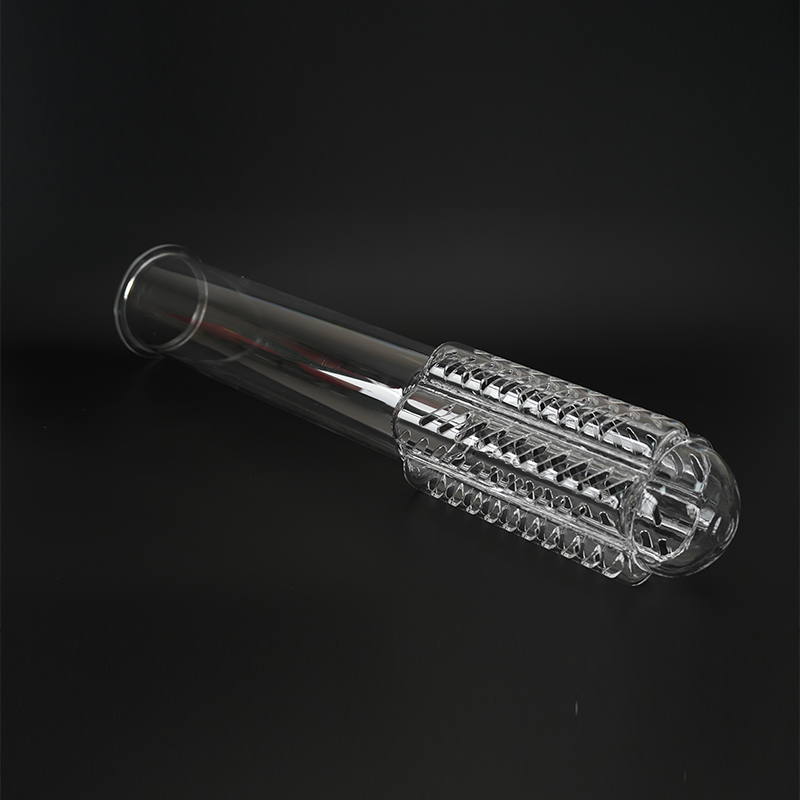
Two product lines are especially relevant to ultraviolet buyers. The first is our range of precision quartz windows and sight glasses, which are polished from UV-grade material and available in JGS1, JGS2, and standard quartz for disinfection, curing, and sensor applications. The second is doped quartz tubing for UV filtration, which was developed for processes that need to reject ultraviolet light rather than pass it, such as protecting UV-sensitive materials in a bright UV environment.
- Precision quartz windows and sight glasses - polished UV-grade windows for chambers, sensors, and process viewports.
- Doped quartz tubing for UV filtration - quartz tubing with controlled UV-blocking performance.
For every inquiry, our team asks for the working wavelength, the required transmission, the dimensions, and the operating conditions before recommending a grade. That process applies equally to a single prototype window and to a container-load wholesale order. If your project depends on ultraviolet light, the fastest way to de-risk it is to specify quartz glass that is manufactured, measured, and documented by people who understand UV.
Key takeaway: A quartz glass manufacturer that measures UV transmission can supply the right grade for every UV application, from a single JGS1 window to wholesale quantities of UV-resistant quartz tubes.
Polecane produkty
Prawo autorskie © Yancheng Mingyang Quartz Products Co., Ltd. Wszelkie prawa zastrzeżone.
Hurtowy producent wyrobów kwarcowych Fabryka Szkła Kwarcowego